ACCA Part Qualified: What It Means and What It Unlocks
Part-qualified ACCA is not an official ACCA designation, but employers use it to describe students who have passed some exams - typically the Applied Knowledge and Applied Skills levels. It already unlocks real roles such as trainee accountant, accounts assistant and junior management accountant, with UK salaries of roughly £28,000-£35,000, and many employers will fund your remaining exams.
After sitting some of your ACCA exams, you may be wondering if there are any career benefits to this, or whether you must write all 13 exams before being considered an eligible, employable accountant.
A search of the term “part qualified ACCA” reveals the differing ideas of employers and students as to what this term means. Some of the ideas that emerge are:
- A student that has received exemptions and has only part of the qualification left
- A student that has written exams up to the professional strategic level
- A student that has not completed 36 months of relevant work experience
- A student that has decided to pursue another qualification after completing foundation level or applied skills level
To employers and students alike, all of these definitions hold some truth. But where does that leave you?
No doubt, you want to know if you would be considered suitably qualified to apply for positions advertised for part-qualified ACCA students. In this article, we will give you some direction regarding ACCA careers that you can apply for.
What does everyone agree on?
Accounting forums offer a wide range of answers and opinions that accountants might find useful and the interpretation of part qualified is no different. However, they all agree. You can’t put ‘part-qualified’ behind your name. Chartered certified accountants are only recognised as such when they become ACCA members.
The general sentiment on forums is that the accounting technician designation, received after the foundation level is the minimum when applying for a trainee accountant position.
Opportunities for part-qualified ACCA students
A word of wisdom about vacancies
Recruiters will specify the finance knowledge and professional skills you need to fulfill key responsibilities. They do this because employers are looking for a certain skill set. How this skill set lines up with ACCA levels is tricky.
You should concentrate on the key skills and responsibilities to determine if they match the skills you have gained at the foundational and applied levels.
Speak directly to the recruiter to get their understanding. It’s possible that the employer has not specified whether the candidate must be AAT qualified, CIMA qualified, and ACCA affiliate or the number of exams completed. This is because the employer is focused on outputs (KPIs).
ACCA Global does not recognise the term part qualified, so employers and recruiters are not using a designation assigned by ACCA but rather communicating a skill level.
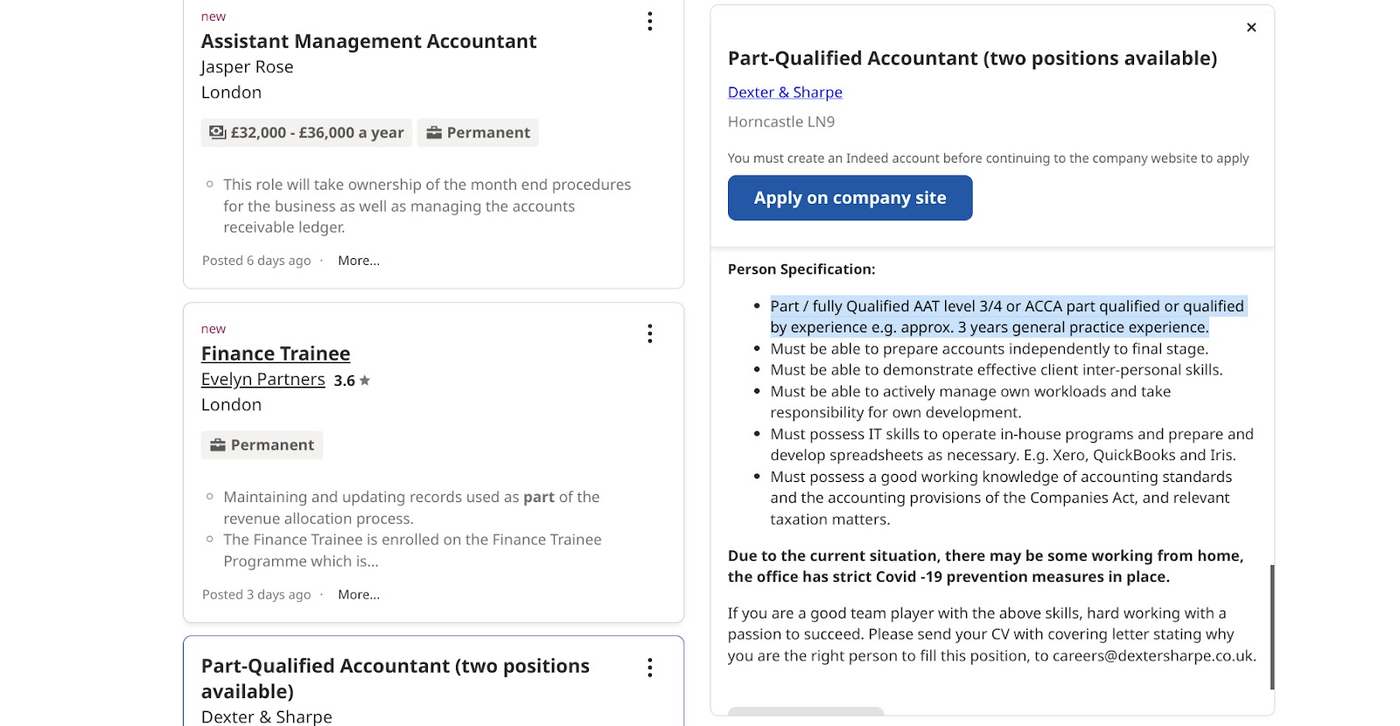
Image courtesy of Indeed.com
What jobs can you apply for as a part-qualified ACCA applicant?
- Trainee/Intern Accountant
- Junior Management Accountant
- Trainee Auditor
- Junior Business Analyst
- Accounts Assistant
- Accounting Technician
- Bookkeeper
- Credit Control Assistant
Here are some examples of vacancies from indeed.com. They show how varied the concept of part qualified is:
- Studying towards their ACA or ACCA qualification (at least have started 3rd year of study)
- ACCA/ACA qualified or actively working towards your qualification
- Part-Qualified ACA / CA / ACCA / ATT / AAT or equivalent
- AT / ATT - Ideally a minimum of 5 GCSE’s (or equivalent) including Maths and English and a minimum of 2 A Levels (or equivalent)
- ACA / ACCA - Ideally a minimum of a 2:2 in your degree or equivalent, although the subject of your degree is not important
- Part / fully Qualified AAT level 3/4 or ACCA part qualified or qualified by experience e.g. approx. 3 years general practice experience.
Salary of a part-qualified ACCA applicant
Even before becoming a chartered certified accountant with ACCA membership, passing foundational and applied-level exams can earn you a higher income. Full-time trainee accountants can earn between £28,000 and £35,000 a year. Some companies will offer to pay for the remaining ACCA course tuition provided the applicant is committed to the company for a period of time.

Image courtesy of Pexels
A way forward
The only reason accounting professionals find themselves dealing with the murky waters of ‘part qualified’ is that employers want to get individuals who are studying part-time into their company as soon as possible. That’s good news for students of ACCA, AAT and CIMA.
Getting into a company that will provide you with the much need practical experience requirements (PERS) for ACCA is key to finishing the qualification.
The ideal for you and a new employer is that you have a well laid out plan to discuss at the interview. How you plan to finish the qualification will be a key factor in securing the job you want.
We can help!
VIVA offers comprehensive ACCA online courses, with on-demand video lectures and an AI tutor on every lesson. These will help you finish your qualification and become fully qualified soon after starting with your new employer. Big bonus!
Check out what students have been saying on Trustpilot about VIVA Financial Tuition's CIMA courses:
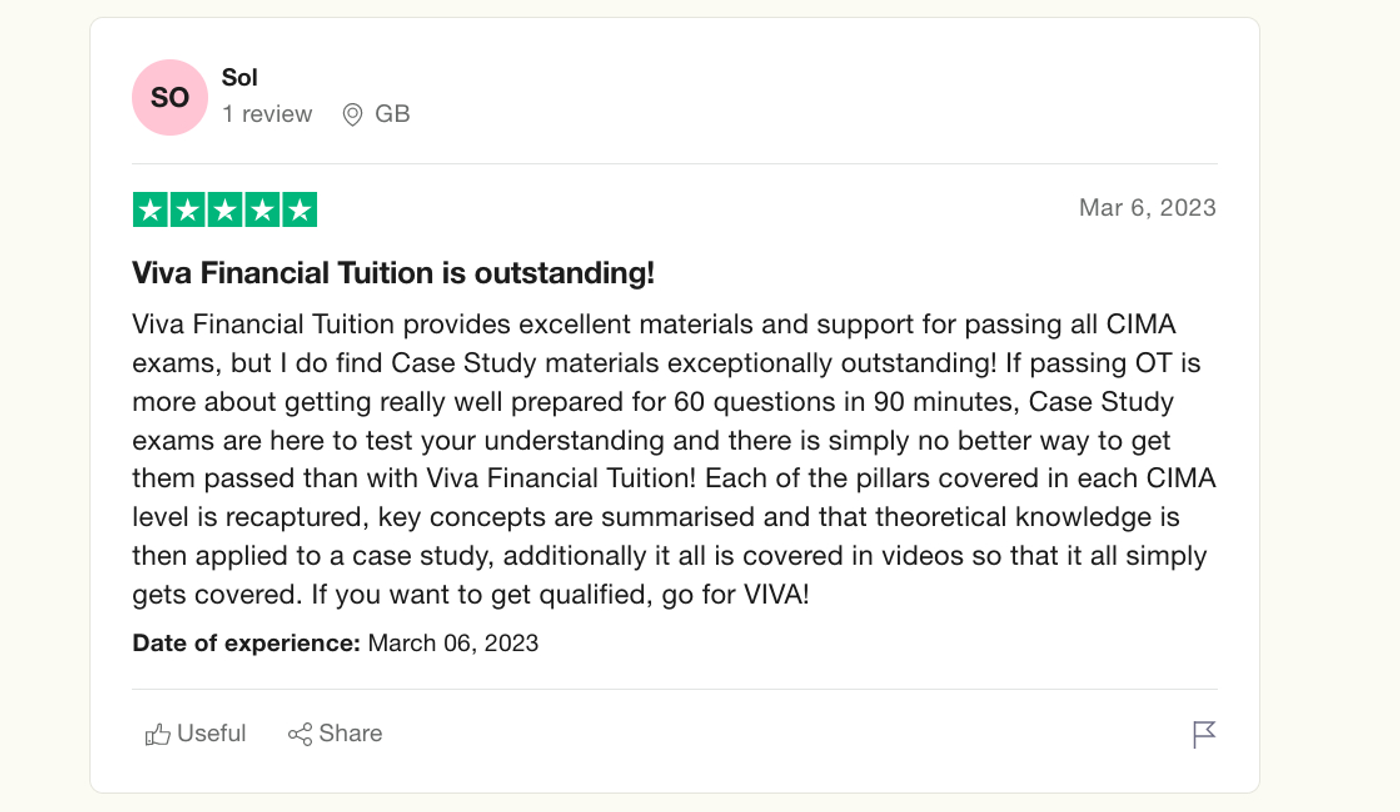
Image courtesy of Trustpilot.com
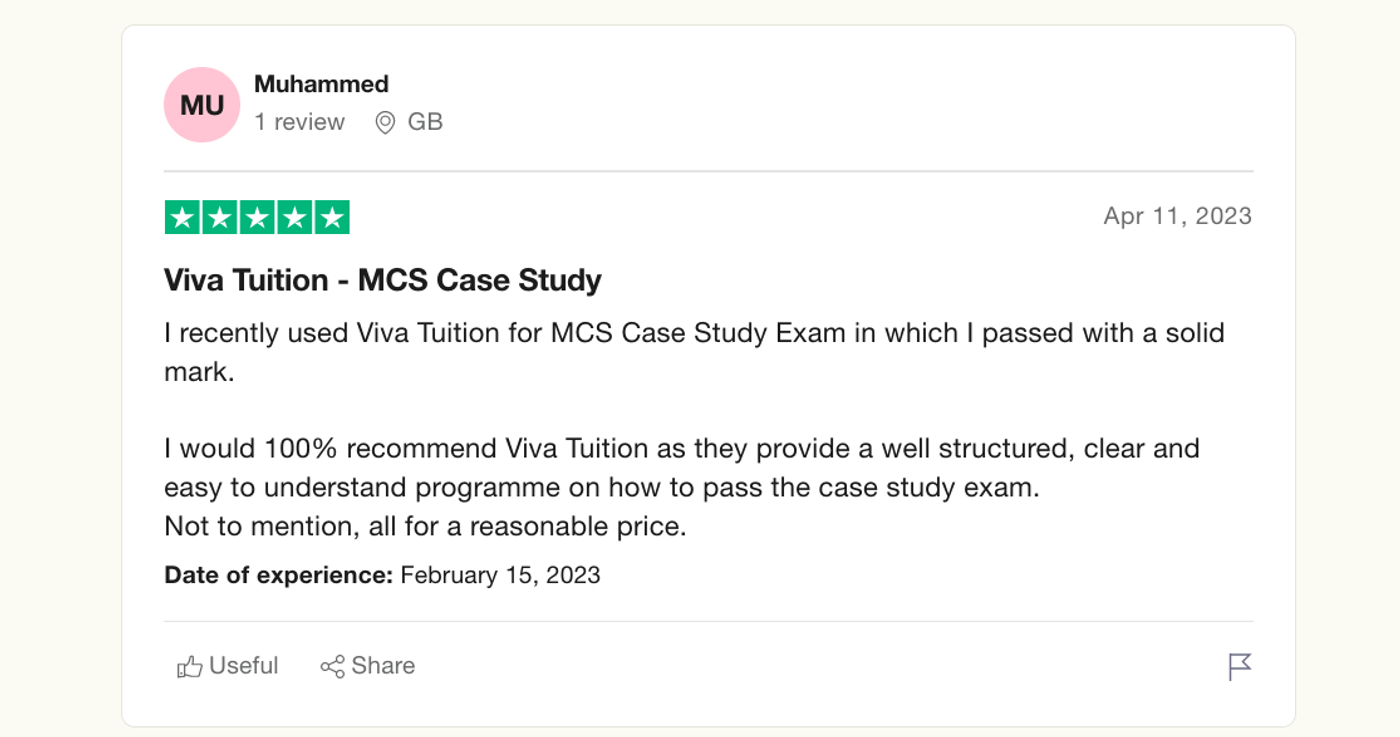
Image courtesy of Truspilot.com
In this article, we’ve shown that the term ‘part-qualified’ is something that is recognised by employers and recruiters but not officially recognised by ACCA.
Being part qualified allows you to apply for any positions that specifically mention this term and allows you to earn a higher income because of your commitment to becoming a qualified chartered accountant.
However, if you really want to earn the salary of a chartered professional, you need to complete all the requirements of the qualification, including practical experience. Once this happens, you can earn anything from £70,000 to £150,000 a year. That’s a huge jump in salary and great motivation to finish.
You can start accelerating your ACCA studies with VIVA - see our current ACCA pricing - and our Trustpilot reviews are a testament to how much we care about getting you qualified as quickly and affordably as possible. Contact us today!
Frequently asked questions
What jobs can you apply for as a part-qualified ACCA applicant?
Typical roles include trainee or intern accountant, junior management accountant, trainee auditor, junior business analyst, accounts assistant, accounting technician, bookkeeper and credit control assistant. Focus on the skills each vacancy lists rather than the label, since employers define part qualified differently.
How much can a part-qualified ACCA student earn?
Full-time trainee accountants who have passed foundation and applied-level exams can earn between £28,000 and £35,000 a year, and some employers will fund the rest of your ACCA tuition. Fully qualified chartered certified accountants can earn from £70,000 to £150,000 a year.
Related guides
ACCA Practising Certificates: Everything You Need to Know
Who needs an ACCA Practising Certificate, when the Audit Qualification applies, and the supervised experience and ACCA forms you need to obtain one.
Updated September 2026
What to Do After ACCA: 9 Paths Worth Considering
Nine paths after ACCA: work abroad, add CIMA or CFA, start a firm or consultancy, teach, move into management accounting, join a start-up or enter fintech.
Updated June 2026
ACCA Affiliate vs Member: What's the Difference?
An ACCA affiliate has passed all 13 exams and the ethics module but still needs three years' practical experience to qualify as a full ACCA member.
Updated January 2024